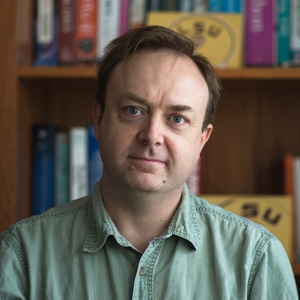
I am a Professor of Physics at Louisiana State University in Baton Rouge, focusing on multiwavelength observational astronomy. In the Department of Physics and Astronomy, I teach undergraduate and graduate astrophysics courses and introductory stellar and extragalactic astronomy for non-majors. At LSU I have supervised two postdoctoral scholars, graduated five graduate students, and worked with many undergraduate and summer students. I am co-director of our DoD/NSF-sponsored Research Experiences for Undergraduates (REU) program.
Originally, I come from the south of England, and I spent my early career there. I completed my undergraduate studies in physics at the University of Oxford before training as a science teacher and teaching at Oxted School in Surrey, UK, for two years. From there, I completed a master's degree in Astronomy at the University of Sussex, and then a PhD that started at Sussex and was finished at The Open University in 1999 under the supervision of Carole Haswell. I did two postdocs: the first at the University of Southampton and then moved much further from home as a Hubble Fellow at The University of Texas at Austin. In 2004, I joined the faculty at LSU.
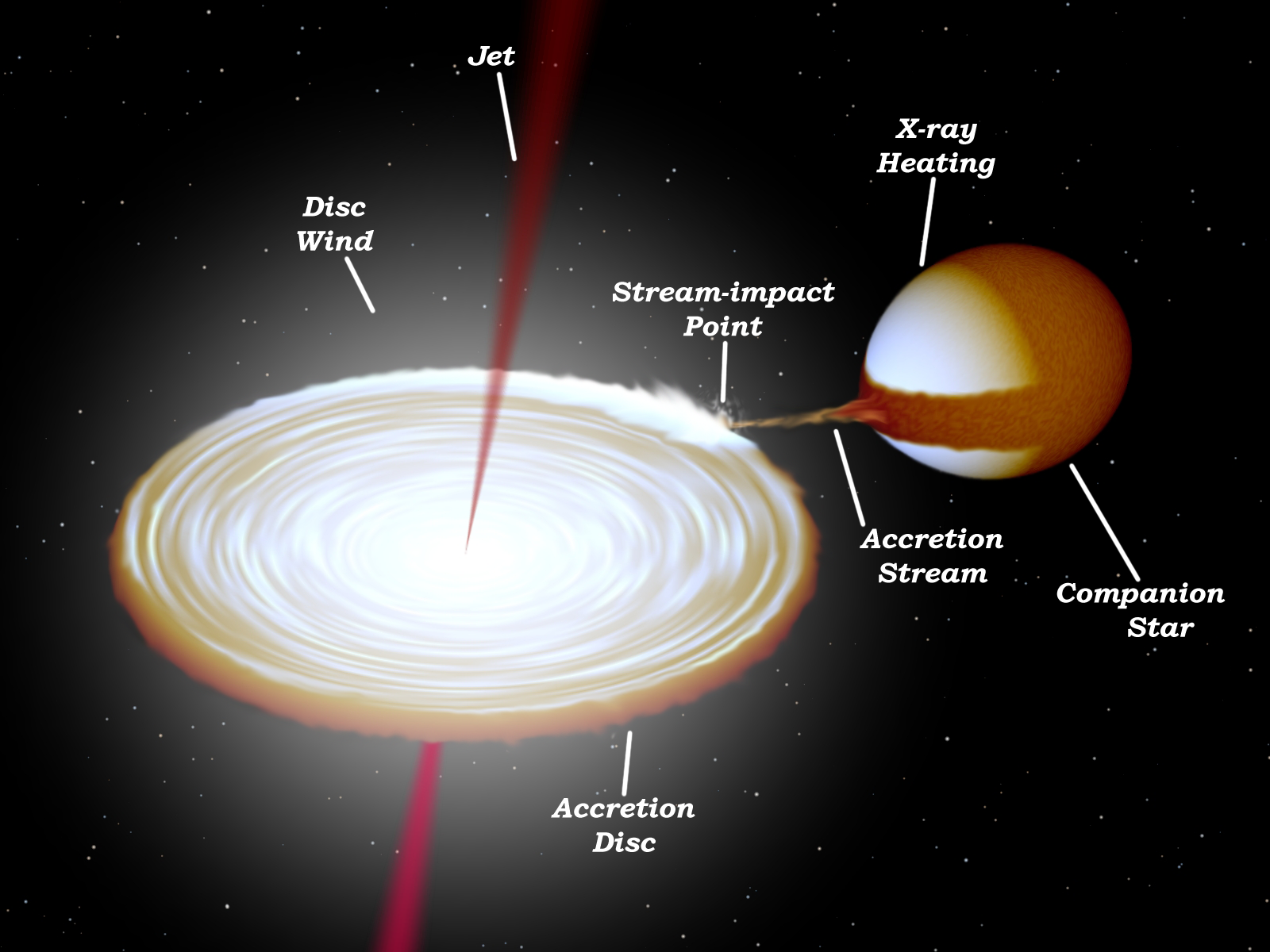
My research focuses on multiwavelength observations of black hole and neutron star X-ray binaries, and more generally the study of Galactic X-ray sources. In X-ray binaries one normal-ish star overflows its 'Roche lobe' (the region it gravitationally dominates) and gas flows onto a neutron star or black hole. Because the stars are orbiting, the gas has angular momentum and forms an accretion disk. In some 'persistent' systems accretion continues relatively steadily, whereas other 'transients' only accrete during dramatic outbursts separated by years to decades or more of faint quiescence.
I began my Ph.D. work on Hubble Space Telescope observations of transient black hole systems in outburst. I have since broadened my work to include quiescent systems as well as persistent neutron star X-ray binaries such as the first detected extra-Solar X-ray source, Scorpius X-1. I have also been involved in the Galactic Bulge Survey, an effort to identify and then classify faint X-ray sources towards the bulge of our Galaxy using the Chandra X-ray Observatory and many other multiwavelength facilities. Most recently I have been working on James Webb Space Telescope Observations of black hole binaries in outburst and quiescence, and preparing for the Vera Rubin Observatory's Legacy Survey of Space and Time.
My research focuses on multiwavelength observations of black hole and neutron star X-ray binaries, and more generally, the study of Galactic X-ray sources. In X-ray binaries, one normal-ish star overflows its 'Roche lobe' (the region it gravitationally dominates), and gas flows onto a neutron star or black hole. Because the stars are orbiting, the gas has angular momentum and forms an accretion disk. In some 'persistent' systems, accretion continues relatively steadily, whereas other 'transients' only accrete during dramatic outbursts separated by years, decades, or more of faint quiescence.
I began my Ph.D. work on Hubble Space Telescope observations of transient black hole systems in outburst. Since then, I have broadened my work to include quiescent systems as well as persistent neutron star X-ray binaries, such as the first detected extra-solar X-ray source, Scorpius X-1. I have also been involved in the Galactic Bulge Survey, an effort to identify and classify faint X-ray sources toward the bulge of our Galaxy using the Chandra X-ray Observatory and many other multiwavelength facilities. Most recently, I have been working on James Webb Space Telescope observations of black hole binaries in outburst and quiescence, and preparing for the Vera C. Rubin Observatory's Legacy Survey of Space and Time.